A change of pace . . .

The last few posts have featured large symphonic works. Today we move to a mostly quiet thoughtful and beautiful composition for solo piano. I mentioned this work yesterday – the Opus 5 Sonata in F Minor for piano by Johannes Brahms. The complete sonata was the centerpiece of my senior recital in undergraduate school – many many years ago.

Today I encourage to listen to a superb recording of the second movement of this great work – the following two links will take you to a wonderful 1971 recording by Claudio Arrau – be sure to listen to them in sequence as the first is for the beginning of the movement while the second is for the conclusion.

This movement begins with a quotation above the music of a poem by Otto Inkermann under the pseudonym C.O. Sternau.

Der Abend dammert, das Mondlicht scheint,
Da sind zwei Herzen in Liebe vereint
Und halten sich selig umfangen

Through evening’s shade, the pale moon gleams
While rapt in love’s ecstatic dreams
Two hearts are fondly beating.

http://www.youtube.com/watch?v=rrX9dz1HHoo

http://www.youtube.com/watch?v=NkLuQtzjxOA

When you follow these links you will also find links to the other four movements of the work from the same recording.

Enjoy and be at peace!

My favorite composer . . .

Yes – I have often been asked – who is my favorite composer – and consistently my answer for many years has been the same – Johannes Brahms – born in 1833 in Hamburg, Germany – died in 1897.

From time to time someone has also asked the logical follow-up question – why. After some reflection I think that I am now finally ready to answer that question.

For me – the music of Brahms represents a superior example of the emotional romantic era music of the 19th century while, at the same time, retaining much of the logical structural integrity and restraint of the great classical era composers of the 18th century.

While I love all of the music that I have ever heard or performed by Brahms – without any doubt two of his works are my most beloved.

First is the Piano Sonata in F Minor, Op. 5 while the other is Ein deutsches Requiem, Op. 45. I will have more to say about each of these monumental works in the coming days.

Robert Shaw wrote the following words about the Requiem in 1997:

“That the world celebrates this year the 100th anniversary of the death of Johannes Brahms with uncountable performances of his German Requiem is testimony not only to the esteem in which his music is held by a large part of the Western World, but also to the very special affection in which his Requiem itself is held.

Though it was his longest work, and acknowledged as very pivotal to his growing renown, he himself was not really satisfied with the title of German Requiem, saying that it referred solely to the language in which it was written. He would now prefer, he said, a ‘human’ Requiem, for he was writing in exploration of a universal human experience.

It should be reported also, that he appeared to find very little comfort in the ritual or dogma of his day. He deliberately abstained from the Latin tradition of centuries in favor of a text which he himself assembled from the Hebraic/Christian Scriptures in Martin Luther’s translation.

Certain things are abundantly clear: first, that he knew these scriptures very well indeed: the text which he gathered to form the seven movements of his Requiem has some sixteen widely separate sources among the thousands of pages of the Old and New Testaments and the Apocrypha.

In the second place, it is clear that he was more concerned with comforting the hearts of those left to mourn, ratheer than with escorting the departed though the medieval horrors of Wrath and Judgement.

The latter half of the nineteenth century was a period of historical, scientific and intellectual enrichment of the Hebraic/Christian tradition. Though the Latin rites for the dead are deeply embedded in the religious history of Western Civilization, there can be little doubt that Brahms uses his text to welcome the consideration of death as a relevant and illuminating aspect of life itself.” (229-230)*

*The Robert Shaw Reader. Edited by Robert Blocker. New Haven: Yale University Press, 2004.

One more gigantic masterpiece . . .

Early in my undergraduate studies I experienced the music of Gustav Mahler (1860-1911) for the first time. Ever since that time I have held a special place of honor in my list of favorites for Mahler’s Symphony No. 2 in C Minor – known as the “Ressurection” symphony – especially the concluding portion of the final movement.

Also – I have also always favored the interpretation of Leonard Bernstein even though he may actually overstep the boundaries of Mahler’s intentions from time to time. However, there is no denying that Bernstein makes the most of every moment and every emotion of Mahler’s gigantic masterpiece.

Today I point you toward a 1974 recording that was offered at the Edinburgh Festival with the London Symphony Orchestra, the Edinburgh Festival Chorus, and soloists Sheila Armstrong, soprano, and Janet Baker, mezzo-soprano – conducted by Leonard Bernstein.

This first link will take you to the final section of the final movement – about 8:30 – while the second link will take you to a recording of the entire symphony – about an hour and a half. The third link will take you to notes and text prepared by Richard Freed for a 2008 presentation at the Kennedy Center in Washington.

Again – turn the volume up and revel in the overwhelming impact of this gigantic masterpiece!

http://www.youtube.com/watch?v=tf5fM1i3MGQ

http://www.youtube.com/watch?v=Bdc5n562zZg

http://www.kennedy-center.org/calendar/?fuseaction=composition&composition_id=2484

Musical giants of the 20th century . . .

Today’s post is offered as an homage to two of the giants of music of the twentieth century – Dmitri Shostakovich (1906-1975) and Leonard Bernstein (1918-1990) – and this link takes you to a performance where their talents are combined

http://www.youtube.com/watch?v=ogJFXqYEYd8

The work is the Finale (Allegro non troppo) of Shostakovich’s thrilling Symphony No. 5 conducted by Leonard Bernstein.

This video offers a marvelous example of how a conductor “becomes” a musical compostion – and please notice – without any score in front of him.

All that needs to be said is – turn up the sound – watch and listen – and enjoy!!!!!


Favorites . . .

With this post I begin a series that will introduce you to some of my personal favorites – composers – and – compositions and arrangements.

I begin with the final movement of an orchestral composition by Paul Hindemith (1895-1963) – born in Germany and came to the United States in 1940.  Hindemith became a citizen of this country in 1946.  The work is the Symphonic Metamorphoses on Themes by Carl Maria von Weber – composed in 1943.  My first awareness of this work was during the time I was studying conducting and composition in the doctoral program at the University of Oklahoma.  I invite you to listen to an impressive performance recorded in 1965 by the Berlin Philharmonic with the composer conducting.  Turn your volume level up and enjoy this stirring performance.

http://www.youtube.com/watch?v=EpxVGaq5TBI

Another monumental work by Hindemith is When Lilacs Last in the Dooryard Bloom’d.  This is a magnificent and complex longer work.  I recommend the recording by Robert Shaw with the Atlanta Symphony Orchestra and Chorus with vocal soloists William Stone, baritone, and Jan DeGaetani, mezzo-soprano.  It was my great pleasure to get to know William Stone during the days we spent together at the University of Illinois in Champaign-Urbana.  This recording may be found at

http://www.youtube.com/watch?v=O2Qzuygm6-0

During the semesters that I was privileged to study composition with Michael Hennagin (1936-1993) at the University of Oklahoma I was introduced to Hindemith’s Craft of Musical Composition.  Hindemith begins his text with an introductory quote of Johann Joseph Fux (1660-1741) in the foreword of his Gradus ad Parnassum:

“Perhaps some will wonder at my undertaking to write about music, when there are at hand the opinions of so many excellent [people] who have written learnedly and sufficiently about it, and particularly at my doing so at a time when Music has become an almost arbitrary matter, and composers will no longer be bound by laws and rules, but avoid the names of School and Law as they would Death itself . . .”

Fux’s book was published when the great Johann Sebastian Bach was only forty years old.

Hindemith then adds his own analysis of his current situation:

“A musician who feels called upon in these times to contribute to the preservation and transmission of the craft of composition is, like Fux, on the defensive.  He is, in fact, even more so than Fux, for in no other field of artistic activity has a period of over-development of materials and of their appolication been followed by such confusion as reigns in this one.  We are constantly brought face to face with this confusion by a manner of writing which puts tones together according to no system except that dictated by pure whim, or that into which facile and mileading fingers draw the writer as they glide over the keys.  Now something that cannot be understood by the analysis of a musican, making every conceivable allowance for individual characteristics, cannot possibly be more convincing to the naive listener.  In Die Meistersinger one reads, it is true, that the composer must make his own rules and then follow them.  But this privilege is granted only to a master – one, moreover, who knows, or at least feels, the bases of his work provided by Nature.

It is not surprising that things have developed as they have.  The discovery, in the last century, of the extreme limits of power and subtlety in the effect of musical tone extended the boundaries of the tonal domain at the disposal of the composer into hitherto undreamed-of distances.  New combinations of tones came to be recognized, and new ways of bending a melodic line were discovered.  It seemed as if the sun had risen upon a new, glowing, iridescent land, into whcih our musican-discoverers rushed head-long.  Blinded by the immense store of materials never used before, deafened by the fantastic novelty of sound, everyone seized without reflectiion at whatever he felt he could use.  At this point instruction failed.  Either it fell into the same frenzy as practice, and devoted itself to flimsy speculation, instead of adapting its systems of teaching to the new material, or it lapsed into inactivity, and what had never been a very strong urge towards novelty turned into a barren clinging to the past.  Confidence in inherited methods vanished; they seemed barely adequate now to gude the beginner’s first steps.  Whoever wished to make any progress gave himself unreservedly to the New, neither helped nor hindered by theoretical instruction, which had simply become inadequate to the occasion.” (1-3)

WOW!  We are only able to wonder what Hindemith might write about our situation in this day and time.

Hindemith, Paul.  The Craft of Musical Composition.  Book 1: Theoretical Part.  Fourth edition.  English translation by Arthur Mendel.  Mainz:  Schott, 1942.


Worthy and worthless for worship . . .

Some of you who know me well are surely asking: “When is Tom going to turn to Robert Shaw to help consider how music communicates with the human brain?” The answer is: “Obviously, not soon enough!”

There is no way in this brief space to explain how “Mr. Shaw” influenced and mentored me toward the person that I am today – both musically and spiritually. “Mr. Shaw” – and I shall have more to say about that salutation in a later post – was born in 1916 and died in 1999. The primary content of this post will be excerpted from “Worship and the Arts” – a lecture delivered November 10, 1981 at Memorial Church at Harvard University – found in The Robert Shaw Reader edited by Robert Blocker*.

So without further information or introduction – at least at this time:

“On what grounds and upon whose authority are we to decide what is worthy and what is worthless for worship?

I suggest to you that the dilemma is more apparent than real, and that it can be solved by common sense, plain every-day good manners and a helathy combination of humility and industry which, however, lays upon no-one the obligation to matriculate at a School of the Arts.

Let me lay before you four criteria which may help this evaluation.

The first is that of motivation. Let’s say right out that purity of purpose dignifies. Not every continent-straddling, world-striding evangelist is an Elmer Gantry. Though, if we were completely frank and had the wry wit of our grandfathers, we might observe ‘that too big a load of success and too much horse power will tear the heart right out of a clutch of humility in no time at all.’ Similarly, 10,000 ‘How great Thou artists’ are not irretrievably doomed for chanting softly and tenderly in Yankee Stadium.

A second criterion must be craftsmanship. Music is a craft, and it has rules and standards – and within comfortable limits these are knowable. There is handsomely constructed music, and there is cheaply constructed music. We do not ask that every building be an unassailable masterpiece, but it ought at least to have the mortar, brick, foundations and girders specified in the contract.

In the third instance, art and music worthy of worship will have historical perspective. It will have origins – which may, in time, lead to originality. This criterion is very close to what we mean by ‘style,’ and it adds to motivation and craftsmanship the incalculable increments of heritage and tradition.

And that is the fourth and final criterion – the creative miracle of ‘revelation’ . . . for, of course, the revelations themselves begin to set standards. We do not set them. Exposure becomes acquaintance and acquaintance becomes ‘communion’; and finally we begin to understand what an act of worship really is and – what it asks of us.

Jesus was asked, ‘Which of the commandments is the first of all?’ And he answered, ‘You shall love God with all your heart, and with all your soul, and with all your mind, and with all your strength.’

We were never told that it would be easy.

Nor did he say, ‘all your heart, most of your soul, and – let’s see – about half your mind.’

The truth is that worship should be a heart-wrenching, soul-searing, mind-stretching and generally exhausting experience. One should not be required to check [one’s] mind at the door, should someone get [that one] to the church on time.” (374-376)

More – much more – to follow.

* The Robert Shaw Reader. Edited by Robert Blocker. New Haven: Yale University Press, 2004.

How music communicates with the human brain . . .

How does music communicate with the human brain? I have found that the answer is really very simple – “It’s complicated!”

As I have studied to prepare this series of posts I have ventured to texts on music theory, on the physics of music, on the psychology of music, and numerous other fields of study. I have also utilized the miracle of information available on the internet to compliment my study.

Today I want to point you to a number of different sources of interest. It is my hope that you will take the time to peruse these links. One thing I am confident of is that if you do – you will also discover that the answer truly is – “It’s complicated!”

First I suggest that you visit a series of posts from Psychology Today. The first is located at http://www.psychologytoday.com/blog/music-matters.  Here you will find links to 21 brief and interesting topics.

Then I suggest that you visit

http://www.psychologytoday.com/blog/mr-personality/201101/the-psychology-musical-preferences.  After reading follow the links a little lower on the left hand side of the page to this series of articles:

Then I suggest that you follow the following two links to two short YouTube video posts by Daniel Levitin, Professor at McGill University in Montreal.  They are titled

“It’s all in the timing: How musicians communicate emotion”

They are located at:

http://www.youtube.com/watch?v=CJMwWX8WX3o and

http://www.youtube.com/watch?v=k4–Pq0bci4

Finally – a longer video segment – approximately 17 minutes following a brief commercial – an informative interview again with Daniel Levitin titled “Why music moves us”

http://www.youtube.com/watch?v=m6Pn9KRVCi4

After you have completed these – I am guessing that you will agree with me when I state: “It’s complicated!”


Communicating with signs and symbols . . .

Several times in my writing I have referenced Philosophy in a New Key: A Study in the Symbolism of Reason, Rite, and Art by Susanne K. Langer*. Today I return to her writing as we continue our quest to understand how music communicates with our human brain.

“Meaning has both a logical and a psychological aspect. Psychologically, any item that is to have meaning must be employed as a sign or symbol; that is to say, it must be a sign or a symbol to someone. Logically, it must be capable of conveying a meaning, it must be the sort of item that can be thus employed. In some meaning-relations this logical requirement is trivial, and tacitly accepted; in others it is of the utmost importance, and may even lead us a merry a chase through the labyrinths of nonsense. These two aspects, the logical and the psychological, are thorougly confounded by the ambiguous verb ‘to mean’; for sometimes it is praper to say ‘it means,’ and sometimes ‘I mean.’ Obviously, a word – say, ‘London’ – does not ‘mean’ a city in just the same sense that a peerson employing the word ‘means’ the place.” (53)

A number of years ago I borrowed the following teaching from the work of Langer.

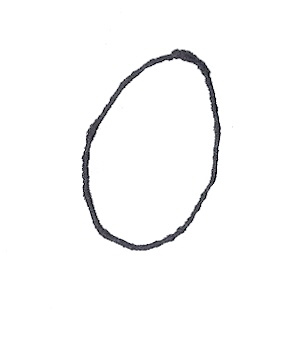
Sometimes it is difficult for symbols to convey the intended meaning because they are incomplete – they lack sufficient detail to accurately convey their meaning. For example:

scan0001

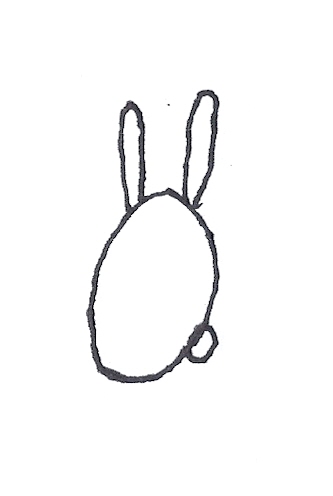
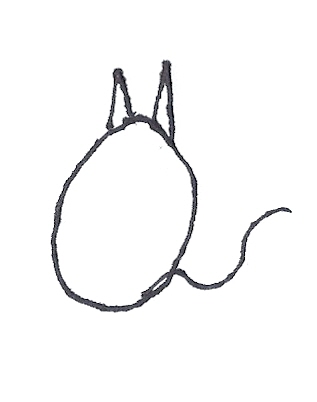
This symbol has some meaning – it is an oval – but if the intent is communicate either of the following examples this first symbol is not complete enough to communicate its intended meaning.

scan0002

scan0003

Without the added details it is not possible for the symbol to communicate its intended meaning.

Again – turning to the words of Langer:

“Music, on the other hand, is preeminently non-representative even in its classical productions, its highest attainments.  It exhibits pure form not as an embellishment, but as its very essence; we can take it in its flower – for instance, German music from Bach to Beethoven – and have practically nothing but tonal structures before us; no scene, no object, no fact.  That is a great aid to our chosen preoccupation with form.  There is no obvious, literal content in our way.  If the meaning of art belongs to the sensuous percept itself apart from what it ostensibly represents, then such purely artistic meaning should be most accessible through musical works.

This is not to say that music is the highest, the most expressive, or the most universal art.  Sound is the easiest medium to use in a purely artistic way; but to work in the safest medium is not at all the same thing as to achieve the highest aim.” (209)

In the next post we will begin to consider how consonance and dissonance impact our understanding of our composed or arranged musical symbols.

* Langer, Susanne K.  Philosophy in a New Key: A Study in the Symbolism of Reason, Rite, and Art.  Third editiion.  Cambridge:  Harvard University Press, 1957.

From the pen of Frederick Buechner . . .

One of my favorite pieces of writing by Frederick Buechner is the one on “Art” from Whistling in the Dark: An ABC Theologized. Buechner’s words came to my mind as I was searching for just the right words to post in light of our recent discussions about music and frames while remembering that this is also the weekend of Easter.

Buechner writes:

“‘An old silent pond. / Into the pond a frog jumps. / Splash! Silence again.’ It is perhaps the best known of all Japanese haiku. No subject could be more humdrum. No langage could be more pedestrian. Basho, the poet, makes no comment on what he is describing. He implies no meaning, message, or metaphor. He simply invites our attention to no more and no less than just this: the old pond in its watery stillness, the kerplunk of the frog, the gradual return to the stillness.

In effect he is putting a frame around the moment, and what the frame does is enable us to see not just something about the moment but the moment itself in all its ineffable ordinariness and particularity. The chances are that if we had been passing by when the frog jumped, we wouldn’t have noticed a thing or, noticing it, wouldn’t have given it a second thought. But the frame sets it off from everything else that distracts us. It makes possible a second thought. That is the nature and purpose of frames. The frame does not change the moment, but it changes our way of perceiving the moment. It makes us NOTICE the moment, and that is what Basho wants above all else. It is what literature in general wants above all else too.

From the simplest lyric to the most complex novel and densest drama, literature is asking us to pay attention. Pay attention to the frog. Pay attention to the west wind. Pay attention to the boy on the raft, the lady in the tower, the old man on the train. In sum, pay attention to the world and all that dwells therein and thereby learn at last to pay attention to yourself and all that dwells therein.

The painter does the same thing, of course. Rembrandt puts a frame around an old woman’s face. It is seamed with wrinkles. The upper lip is sunken in, the skin waxy and pale. It is not a remarkable face. You would not look twice at the old woman if you found her sitting across the aisle from you on a bus. But it is a face so remarkably seen that it forces you to see it remarkably just as Cezanne makes you see a bowl of apples or Andrew Wyeth a muslin curtain blowing in at an open window. It is a face unlike any other face in all the world. All the faces in the world are in this one old face.

Unlike painters, who work with space, musicians work with time, with note following note as second follows second. Listen! says Vivaldi, Brahms, Stravinsky. Listen to this time that I have framed betweent the first note and the last and to these sounds in time. Listen to the way the silence is broken into uneven lengths between the sounds and to the silences themselves. Listen to the scrape of bow against gut, the rap of stick against drumhead, the rush of breath through reed and wood. The sounds of the earth are like music, the old song goes, and the sounds of music are also like the sounds of the earth, which is of course where music comes from. Listen to the voices outside the window, the rumble of the furnace, the creak of your chair, the water running in the kitchen sink. Learn to listen to the music of your own lengths of time, your own silences.

Literature, painting, music – the most basic lesson that all art teaches us is to stop, look, and listen to life on this planet, including our own lives, as a vastly richer, deeper, more mysterious business than most of the time it ever occurs to us to suspect as we bumble along from day to day on automatic pilot. In a world that for the most part steers clear of the whole idea of holiness, art is one of the few places left where we can speak to each other of holy things.

Is it too much to say that Stop, Look, and Listen is also the most basic lesson that the Judeo-Christian tradition teaches us? Listen to history is the cry of the ancient prophets of Israel. Listen to social injustice, says Amos; to head-in-the-sand religiosity, says Jeremiah; to international treacheries and power-plays, says Isaiah, because it is precisely through them that God speaks [God’s] word of judgment and command.

And when Jesus comes along saying that the greatest command of all is to love God and to love our neighbor, he too is asking us to pay attention. If we are to love God, we must first stop, look, and listen for [God] in what is happening around us and inside us. If we are to love our neighbors, before doing anything else we must see our neighbors. With our imagination as well as our eyes, that is to say like artists, we must see not just their faces but the life behind and within their faces. Here it is love that is the frame we see them in.

In a letter to a friend Emily Dickinson wrote that ‘Consider the lillies of the field’ was the only commandment she never broke. She could have done a lot worse. Consider the lillies. It is the sine qua non of art and religion both.” (14-16)

Buechner, Frederick. Whistling in the Dark: An ABC Theologized. San Francisco: Harper & Row, Publishers, 1988.